Survey Results for Equalities, Human Rights, and Civil Justice Committee Inquiry into Neurodivergence Evidence Session
This is a summary of the results from the survey that AMASE, ARGH, and SEMA ran of our members, in preparation for presenting to the Equalities, Human Rights, and Civil Justice Committee on 20th January 2026, as part of their Inquiry into Neurodivergence in Scotland.
The results show systemic issues across the three areas of Education, Employment, and the Criminal Justice System, in which our community is being failed repeatedly. There are many opportunities for improvement here, and in-depth work will help close the significant shortfall in experiences and outcomes.
These results are high level and provide a clear snapshot of how our community across Education, Employment, and the Criminal Justice System is being treated. There are clear correlations between certain areas, illustrating the need for more in depth work to be done, to understand how these failures occur, what can be done to avoid them, and most importantly improve the experiences and outcomes for our community.
We would draw attention to the Royal College of Psychiatrists in Scotland’s presentation to the Committee in which they pointed out that the neurodivergent community (specifically autistic, ADHD, and AuDHD individuals) is much larger than previously thought – most likely nearer 20%, or 1 in 5, of the population. Given the estimated population of Scotland in mid-2024 was 5.55million, that would make our community closer to 200,000 people across Scotland.
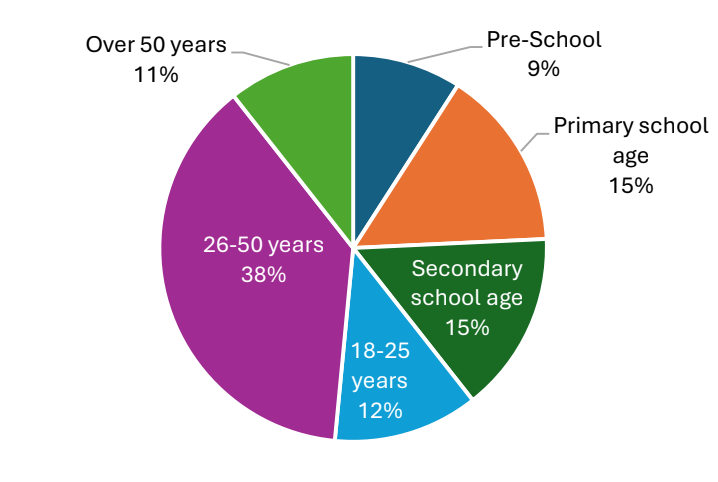
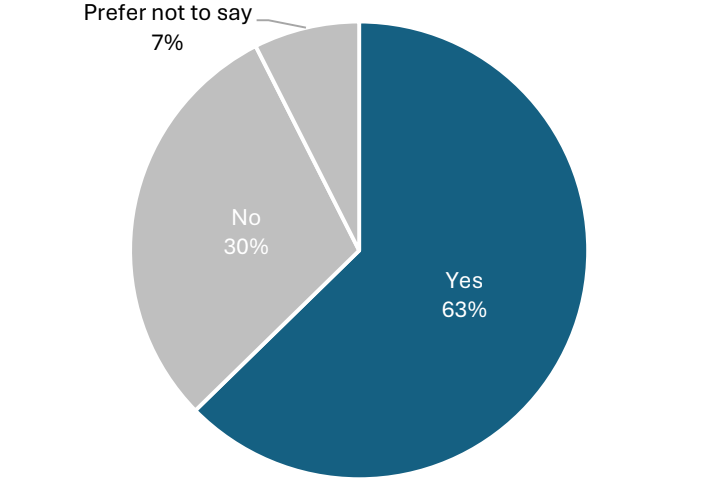
It is essential to note, given the widening closure of neurodivergent assessment pathways across Scotland, that figure 4. Age identified as autistic, that the bulk of our members (61% total) were identified as adults, and that 63% said they identified as neurodivergent in another capacity in addition to being autistic (fig 5. Other Neurodivergence).
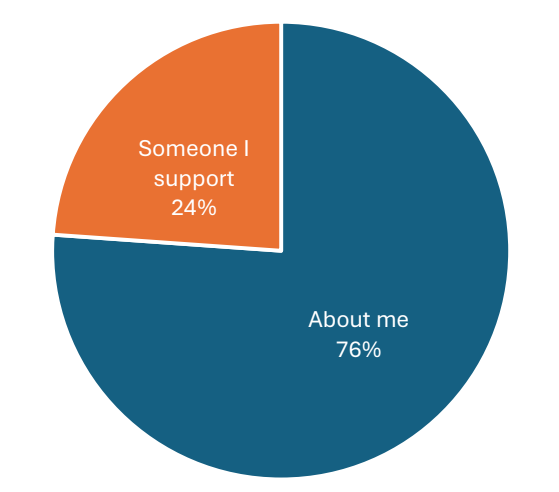
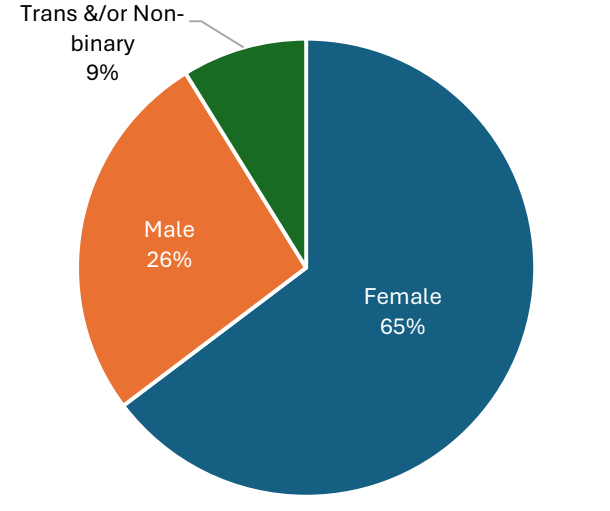
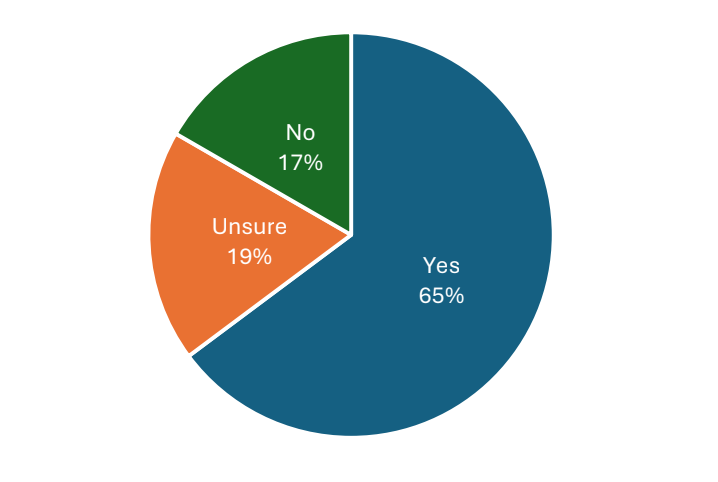
In putting together the questionnaire we used a 5-point Likert scale, which is helpful for converting qualitative data into quantitative output. Throughout attention is drawn to the negative outcomes our community is experiencing. Note, firstly, that 65% of respondents identified as female (figure 3), which is less than the expected survey bias (normally at 67%); and secondly, that 24% of respondents were replying for someone they supported (figure 1). We had an excellent completion rate, with no drop off over the course of over 30 questions.
Intersectionality
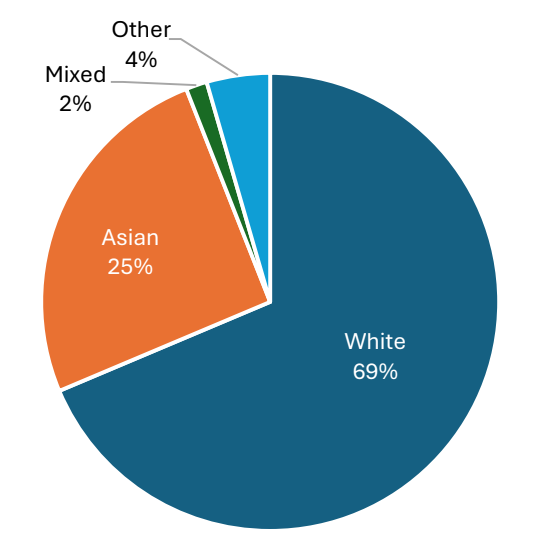
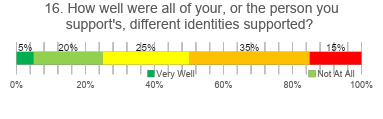
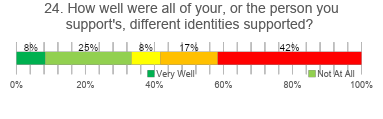
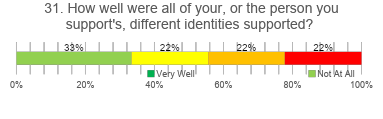
SEMA asked their community and members about intersectional experiences. Given that the vast majority of the respondents were not white, the main identity in consideration here is (perceived) race, faith or ethnicity. This does not exclude other identities being factored in when experiencing a lack of support. We asked these questions of respondents because of the conversations we have with stakeholders around intersectionality, and the lack of data collected factoring in intersectional experiences, even in Scottish Government Mainstreaming Reports and the Census. Although our data provides only a glimpse, we urge improvements in data collection when reviewing and planning support services for neurodivergent individuals. In the context of Education, we found that only 25% of respondents felt supported regarding their multiple identities. For Employment, 33% said holistic support was good or very good and within the Criminal Justice System, 33%. There is a question of multiple levels of discrimination being faced by individuals, which may increase as the number of protected characteristics increases. The Equalities, Human Rights, and Civil Justice Committee should take this into account within their report considerations and recommendations.
Education
“My [neurodivergence] was in no way understood. I was taught in a way that wasn’t suitable to the way that I need to learn, and I was constantly made to feel like I was misbehaving”
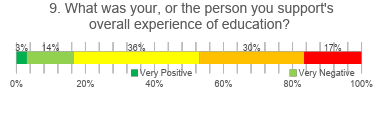
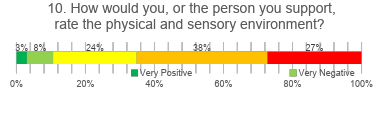
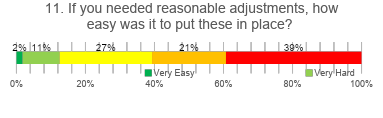
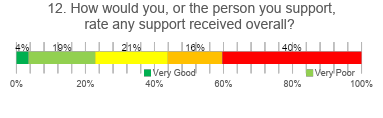
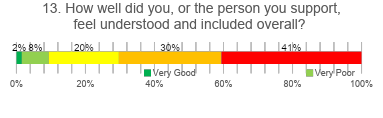
Figure 9. Overall Experience of Education is overwhelmingly negative (53% said it was either negative or very negative), with only 10% saying that their experience was positive to very positive. It would be easy to conclude, when looking at figure 10. Rating the physical and sensory environment, that the reason for this is purely environmental. However, figure 11and 12also show very similar levels of both positive and negative outcomes regarding obtaining reasonable adjustments (9% easy to very easy compared to 60% responded that it was hard or very hard) and overall support (56% rated it as poor or very poor, compared to 13% rating overall support as good to very good) respectively. What this shows is that there is a systemic failure, not one sole source. Given those results, it is no surprise that respondents felt inclusion and understanding where predominantly low, with only 1% saying it was very good, and 8% saying it was good (figure 13). 71% rated inclusion as poor or very poor.
“Bullied and unable to tell the teachers, the library and toilets were safe spaces most of the time.
Lunchtime was a sensory hell, lots of noise and so many different smells made me feel ill without knowing why”
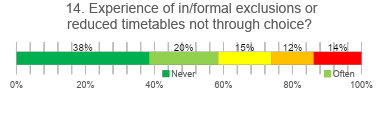
At the same time almost 60% had experienced some form of in/formal exclusion and/or reduced timetable out with their control (figure 14) – though it is worth noting this is across the educational lifetime, and so will have been influenced by the high percentage of neurodivergent children who face in/formal exclusion and reduced timetables during their school experience.
“If my autism had been identified, I could have done so much more in education. I missed around 20% of school due to anxiety and sensory overwhelm but no one identified it as I was quiet and didn’t make a fuss”
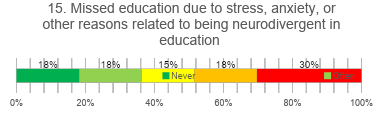
It is no surprise therefore that figure 15. How often did you miss education due to anxiety, stress or other reason related to being Neurodivergent and in education, shows 49% of respondents said ‘sometimes’ to ‘often’. Only 18% said they had never missed education for these reasons. Whilst not part of this study, the long-term effects of these absences on successful life outcomes are worth a study. If we took those percentages and applied them to our community, based on population figures, we are potentially looking at close to 100,000-120,000 people being continuously and systematically failed by the education system throughout their lives in some fashion.
Employment
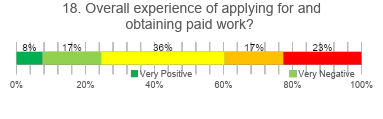
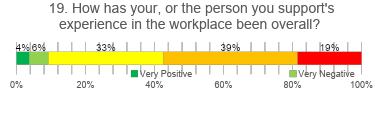
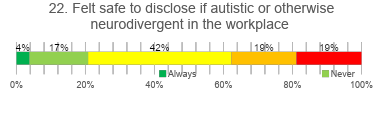
Experiences of the workplace are in line with those in Education, in that they are predominantly negative. Figure 18. Overall Experience of applying for and obtaining paid work shows that from the outset our community is facing hurdles to even get paid work, let alone their experiences in work, or work retention rates. A study around work retention rates, and reasons for leaving and/or staying would shed further light on best practices that improve retention rates for neurodivergent individuals. Only 9% felt that their experience of workplace support was positive or very positive, with 53% finding it negative or very negative. This was no doubt affected by respondents’ experience of workplace bullying, with 69% saying that had experienced it in some fashion. There is a clear correlation with discrimination and disclosure, with 65% saying they felt they had experienced it because of being neurodivergent, and only 4% saying that they had always felt safe disclosing their disability.
“Trying to be successful for a permanent post is extremely challenging, as reasonable adjustments are not understood. I was told I’d be given ten minutes with the questions before interview but so would everyone else! I’m the slow processor so it gave others a great advantage over me. Working in schools, I’m always asked back, which is positive, but I can’t get a permanent post”
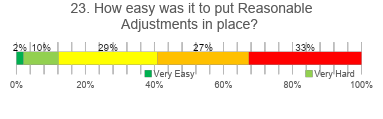
Figure 23 How easy was it to put Reasonable Adjustments in place? Illustrates that there is a significant gap between what respondents feel they need, and the ease (let alone success) with which they can get it, as only 2% felt it was very easy, and 4% saying it was easy. A significant 59% said it was either hard or very hard (26% and 33% respectively).
Criminal Justice System
“Youth justice services are abusive and CJS system generally inappropriately responds to neurodivergent people due to fundamental misunderstandings and carceral approach”
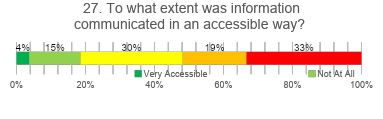
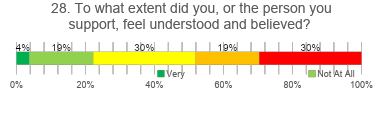
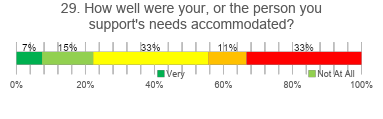
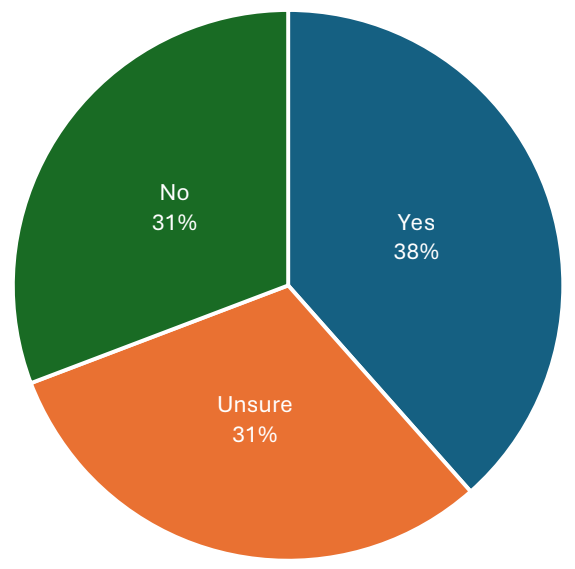
Lastly, we asked respondents about their interactions with the criminal justice system. Again, barriers where significant, but so were comparable successes compared to both Education and Employment. Figure 28 shows that 22% of respondents felt believed and understood, and 23% said that their needs were well accommodated. Figure 30, which asks if respondents have ever avoided or pulled out of the Criminal Justice system, shows that 38% said yes. This is broadly in line with the average rate at which crimes go unreported, but without further investigation it is both unclear if this similarity holds (since our question covers more than just the reporting of crimes), and what the causes might be as to whether it diverges or not.
We also had what I think is a good illustration of how the systems, holistically, are failing, in an experience that was recounted by one of our respondents, and that is centred around their interaction with the Criminal Justice system.
“The Procurator Fiscal’s office and the VIA do not understand how dynamic autistics traits can be. It was assumed that because I speak, I will be able to speak at all times. When I asked for an AAC device for when I have to give witness testimony for a trial, I was met with confusion…
I have requested not proceed with my case [because of] the impact of the long journey to get to this point, and lack of confidence in my needs being met, and being further traumatised”
There is so much in this short tale that illustrates how autistic individuals are being failed. Firstly, the individual was not being supported sufficiently and hadn’t been for some time. They and their family were just left to ‘cope’. Already under pressure, the individual with the support of a family member, tried a journey on public transport (an incredibly difficult thing for many autistics to do at the best of times). It was too much and they ended up having a meltdown. They did not harm anyone nor appreciably damage the bus. They did disturb passengers and disrupt the service. They were in distress to such a degree that effectively they had an uncontrollable autonomic response to a high stress environment. And for that they were charge by the police with breach of the peace. Then they were inadequately supported and represented through the criminal justice system, a system which itself as illustrated by this example, unnecessarily criminalises autistic behaviours. They pled guilty (on what is arguably bad advice). And now the individual has a criminal record. This will be with them for the rest of their life, negatively affecting their ability to secure employment, for example, and colouring all their subsequent interactions with social work. The cause of that record isn’t “bad behaviour”. It’s unmet need, unmet support requirements. In this case, prior to, during, and after their bus journey. This lack of support and accommodations led to discriminatory outcomes and unnecessary criminalisation for this individual.
The situation was avoidable had the needed support, accommodation, and ultimately understanding and basic human compassion, been present not just throughout the process, but in the first place.
“It is very hard to speak up and feel listened too. I felt talked over by the legal team, things that didn’t need to be shared were publicly shared and I was mortified, further adding to the awfulness of the situation. Becoming situationally mute created further problems as it made everyone seem angry with me, which made it even harder for me to find the words”
Only funding need when there is an extreme crisis, the go to approach of Local Authorities across the country, is too late and always after the fact. Acting preventatively before harm and suffering occurs should be how we act as a modern, compassionate, supportive and progressive society.
Conclusion
There is huge opportunity for improvement here, across the board, and we believe it is achievable with the right approach. An approach that at its core involves meaningfully engaging in a Human Rights Based Approach to implementation, law and policy; and fully realising ‘nothing about us, without us’. The consistent collection of a greater quantity of detailed quality data across sectors, that can be more readily disaggregated, would enable a much clearer picture, and allow for far more targeted approaches to solution formation. It would also help to identify where and how intersectional identities are coming into play.
AMASE, ARGH & SEMA Combined Survey Results
1. Respondents
2. Ethnicity
3. Gender
4. Age identified as autistic
5. Other Neurodivergence
EDUCATION
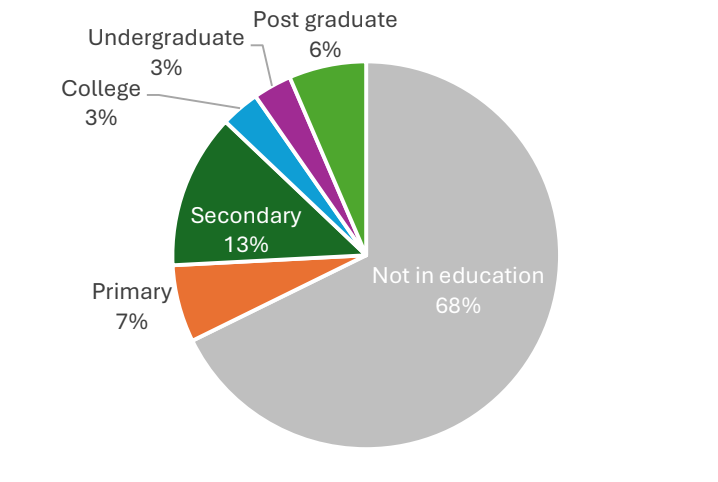
6. Currently in Education
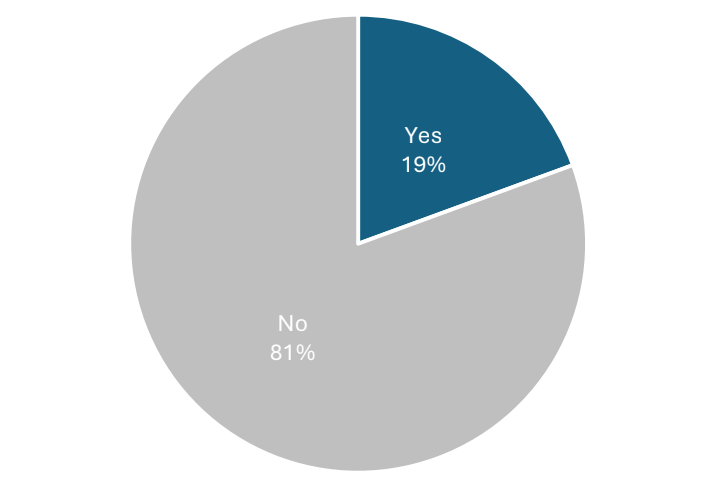
7. Did you ever home educate?
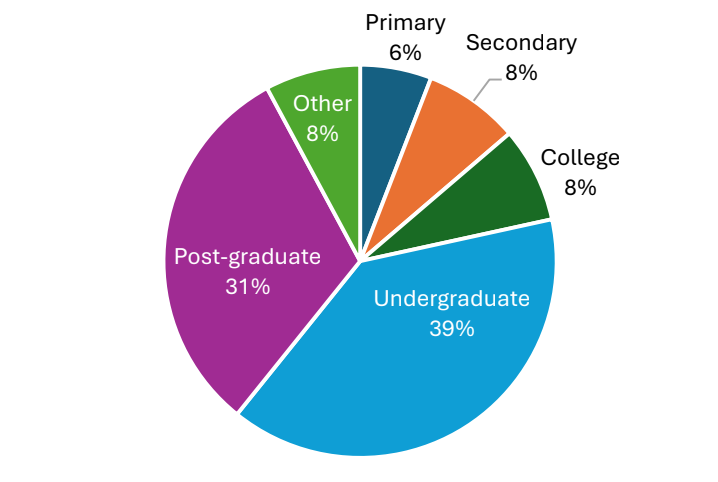
8. Level of Education Attained
EMPLOYMENT
20. Experience of bullying in the workplace
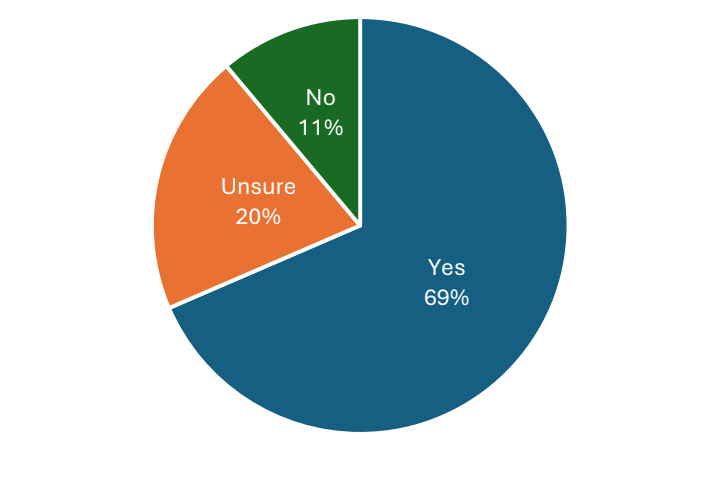
21. Experience of discrimination for being neurodivergent
CRIMINAL JUSTICE SYSTEM
30. Have you ever avoided or pulled out of the Criminal Justice System?
We would like to thank all our members that took the time to respond and enabled us to put together this snapshot survey of our community, and that helped inform our presentation to the Equalities, Human Rights, and Civil Justice (EHRCJ) Committee as part of their Inquest into Neurodivergence.



ENDNOTES
[1] Equalities, Human Rights and Civil Justice Committee | Scottish Parliament TV
[2] AuDHD is the community shorthand for those who are both autistic and ADHD
[3] https://www.nrscotland.gov.uk/publications/mid-2024-population-estimates/
[4] Figure 16. How well were all of your, or the person you support’s, different identities supported?
[5] Figure 24. How well were all of your, or the person you support’s, different identities supported?
[6] Figure 31. How well were all of your, or the person you support’s, different identities supported?
[7] Figure 11. How easy was it to put reasonable adjustments in place?
[8] Figure 12. How would you rate your overall support?
[9] Figure 13. How well did you feel included and understood?
[10] Figure 14. Experience of In/Formal Exclusion or Reduced Timetable Not Through Choice
[11] See iv above
[12] Figure 19. Overall Experience of Support in the Workplace
[13] Figure 20. Experiences of bullying in the workplace
[14] Figure 29. Were needs accommodated? (emotional, sensory, communication etc.)
[15] https://www.ourwatch.org.uk/news/nwns-crime-and-community-survey-2023-findings-released
[16] Questions 17, 25, 26, and 32 all asked for written comments and/or experiences. These formed the source of the quotes in the document narrative